
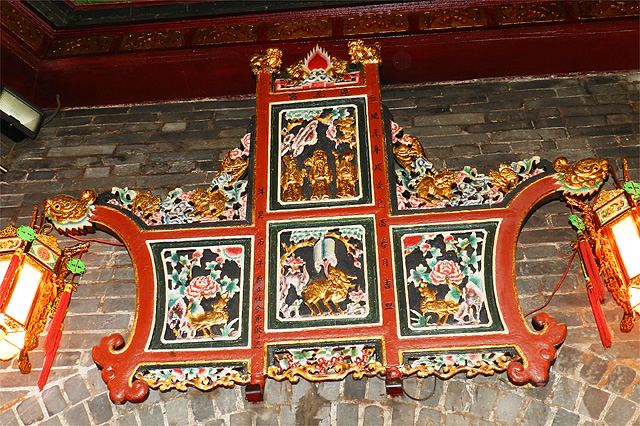
廟內藏有不少清朝年間的珍貴文物,例如同治年間的古鐘(1865年)以及宣統年間的彩門(1909年)等。古鐘由清朝官員及慈善家鄧懷清敬奉,鑄有同治三年農曆十二月(1865年)的字樣,由此可追溯建廟年份。善信在祭祀後多會敲鐘擊鼓,取其「鐘鼓齊鳴」,寓意稟報神明希望得其庇佑。彩門則是懸掛在前殿右側廟門之上,刻有象徵五福臨門、高官厚祿、長命百歲的福祿壽,也有帶來好運的福鼠及「麟吐玉書」等祥瑞圖案。
庙内藏有不少清朝年间的珍贵文物,例如同治年间的古钟(1865年)以及宣统年间的彩门(1909年)等。古钟由清朝官员及慈善家邓怀清敬奉,铸有同治三年农历十二月(1865年)的字样,由此可追溯建庙年份。善信在祭祀后多会敲钟击鼓,取其「钟鼓齐呜」,寓意禀报神明希望得其庇佑。彩门则是悬挂在前殿右侧庙门之上,刻有象征五福临门、高官厚禄、长命百岁的福禄寿,也有带来好运的福鼠及「麟吐玉书」等祥瑞图案。
The temple collected various kinds of precious cultural or historical relics in Qing Dynasty. A bell bearing the date “12th lunar month of the 3rd year (1865) in Tongzi reign” was donated by Teng Husi-ching, a mandarin and philanthropist. Choi Moon (decorated door) made in 1909, is suspended on the entrance at the right side of the temple. It was crafted with Fu Lu Shou and Bats, which symbolize longevity and good fortune respectively.