
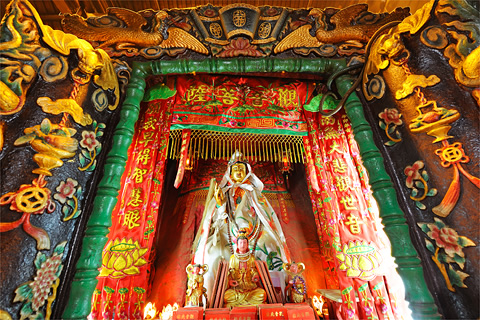
觀音源自印度,本為男相,自入中土後,漸轉化為端莊慈祥的女性,也是慈悲象徵,既有身披白衣、手持楊柳、淨瓶或魚籃,亦有千手千眼等法相。觀音為救渡眾生的大菩薩,相傳曾立誓渡眾生,透過慈悲心聆聽眾生苦難和祈求,每當眾生身受苦難,發聲發意求救,頌念觀音聖號,便可獲得救助。正因「觀其音聲,皆得解脫」,所以名為「觀世音菩薩」。觀音廟亦稱「蓮花宮」或「水月宮」,因觀音相傳坐在蓮花上修道;而「水」與「月」不單具有清靜及脫離塵俗之意,也比喻世事變幻無常,如幻非真。
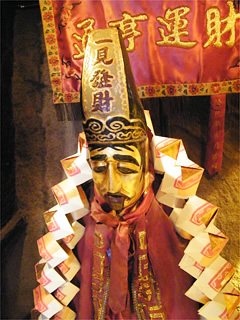
陰財神又名白無常,是勾攝魂魄的鬼卒之一。由於白無常的高帽上有「一見發財」的字樣,因此祂亦被善信視為招財使者的象徵,給人帶來發財的好運氣。
观音源自印度,本为男相,自入中土后,渐转化为端庄慈祥的女性,也是慈悲象征,既有身披白衣、手持杨柳、净瓶或鱼篮,亦有千手千眼等法相。观音为救渡众生的大菩萨,相传曾立誓渡众生,透过慈悲心聆听众生苦难和祈求,每当众生身受苦难,发声发意求救,颂念观音圣号,便可获得救助。正因「观其音声,皆得解脱」,所以名为「观世音菩萨」。观音庙亦称「莲花宫」或「水月宫」,因观音相传坐在莲花上修道;而「水」与「月」不单具有清静及脱离尘俗之意,也比喻世事变幻无常,如幻非真。
阴财神又名白无常,是勾摄魂魄的鬼卒之一。由于白无常的高帽上有「一见发财」的字样,因此祂亦被善信视为招财使者的象征,给人带来发财的好运气。
Kwun Yum or Kwun Sai Yum (觀世音) is known for centuries as a deity of sympathy, compassion and mercy. She is willing to hear the pleas of those who are suffering. Kwun Yum is a deity in both Buddhism and Taoism. Kwun Yum in the earlier times was a male divinity, but evolved to be a female deity in the Tang Dynasty. Arising from a saying that Kwun Yum studied Taoist teachings on lotus blossoms, some Kwun Yum Temples are also called Lin Fa Kung or Palace of Lotus Flower (蓮花宮). Temples dedicated to Kwun Yum are often alternatively known as Shui Yuet Kung or Palace of Water and Moon (水月宮), which stands for quiet, peaceful and detached from the material world.
“Yim” Choi Sun, also known as Bai Wu Chang, is the Pawn of Death in original. Perhaps because of four Chinese words meaning “get rich at one glance” emblazoned on his hat, he also acts as the God of Wealth, who can give worshippers fortune and good luck.