
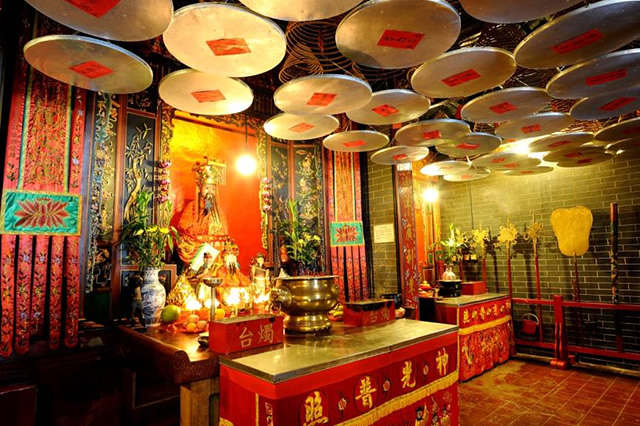
有說洪聖是「南海之神」,為華南一帶的神祇。隋代已建有南海神廟,善信供奉衪以求舟楫安全,風調雨順。唐朝南海神被冊封為「廣利王」,當中含廣納財利之意。宋代更於「廣利王」前加號「洪聖」。從此,「洪聖廣利大王」成為南海神的封號。也有傳說指洪聖原名洪熙,為唐朝(618-907年)官員,因精通天文地理,又常幫助漁民而揚名四海,歿後更顯聖救民,於是立廟奉祀,死後獲皇帝追封為「洪聖廣利大王」。
有说洪圣是「南海之神」,为华南一带的神祇。隋代已建有南海神庙,善信供奉衪以求舟楫安全,风调雨顺。唐朝南海神被册封为「广利王」,当中含广纳财利之意。宋代更于「广利王」前加号「洪圣」。从此,「洪圣广利大王」成为南海神的封号。也有传说指洪圣原名洪熙,为唐朝(618-907年)官员,因精通天文地理,又常帮助渔民而扬名四海,殁后更显圣救民,于是立庙奉祀,死后获皇帝追封为「洪圣广利大王」。
Hung Shing is a famous deity in the Southern China, also named the “God of South Sea”. The earliest temple of “God of South Sea” found in Guangdong Province was believed to be built in the Sui Dynasty. Worshippers believe Hung Shing could save them from marine danger. In the Tang Dynasty, Hung Shing upraised by the Emperor as the “King of Kwan Li” which represented good fortune. In the Song Dynasty, “King of Kwan Li” renamed to “King of Hung Shing Kwan Li” (洪聖廣利大王). According to legend, Hung Shing was a virtuous official in the Tang Dynasty (618-907) named Hung Hei, who had established an observatory which enabled accurate weather prediction. It was said that his spirit had saved many lives from typhoons and local disasters. Thus, the Emperor crowned Hung Hei the “King of Hung Shing Kwan Li”.
