
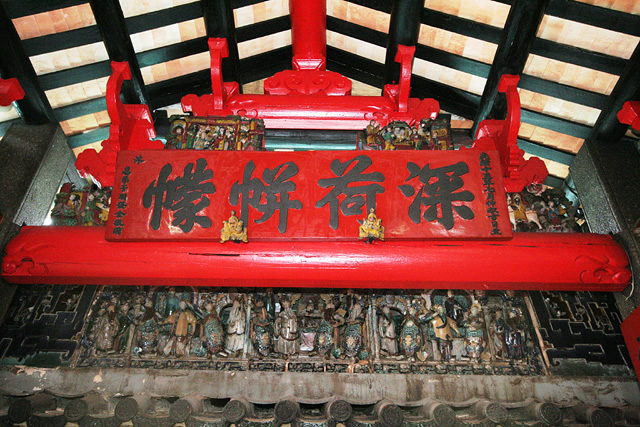
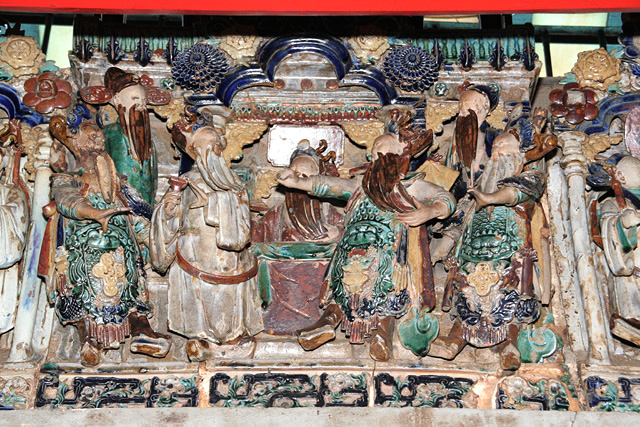
女兒牆原指城牆上面的矮牆,後來凡房屋外牆高出屋檐部分的矮牆、露天地方、台上、牆上的牆都統稱為女兒牆。廟內天井香亭兩旁的女兒牆,特設多組造工精巧、歷史悠久的石灣陶塑和精美木雕,而橫樑及直柱之間的接駁位更配置有三角形建築構件,稱為「雀替」。主殿入口處上有一塊直掛式牌匾,恭稱洪聖為「洪聖明王」;香亭左右兩邊各掛有光緒十五年(1889年)「深荷帡朦」及光緒十四年(1888年)「長沾聖澤」的橫匾額,意謂深受神恩庇護及關照。
女儿墙原指城墙上面的矮墙,后来凡房屋外墙高出屋檐部分的矮墙、露天地方、台上、墙上的墙都统称为女儿墙。庙内天井香亭两旁的女儿墙,特设多组造工精巧、历史悠久的石湾陶塑和精美木雕,而横梁及直柱之间的接驳位更配置有三角形建筑构件,称为「雀替」。主殿入口处上有一块直挂式牌匾,恭称洪圣为「洪圣明王」;香亭左右两边各挂有光绪十五年(1889年)「深荷帡朦」及光绪十四年(1888年)「长沾圣泽」的横匾额,意谓深受神恩庇护及关照。
Parapet walls (a barrier which is an extension of the wall at the edge of a roof, terrace, walkway or other structure) at the side of courtyard are widely decorated with exquisite Shiwan ceramic figurines. A vertical plaque marked “King of Hung Shing Kwan Li” is hanged above the entrance of main hall. There are another 2 plaques hang in the left and right sides of the pavilion respectively. They express the gratitude towards Hung Shing.
